
Experts and Ethics: Parliamentary Focus Group on Jhatka
The discussions were supported by representatives from Accles & Shelvoke, animal welfare experts, Capreolus Club, DEFRA, FDQ, Fisher Abattoir Systems, Food Standards Agency, Humane Slaughter Association, Institute of Meat, Jarvis UK, and Joss Faulkner Consultancy.
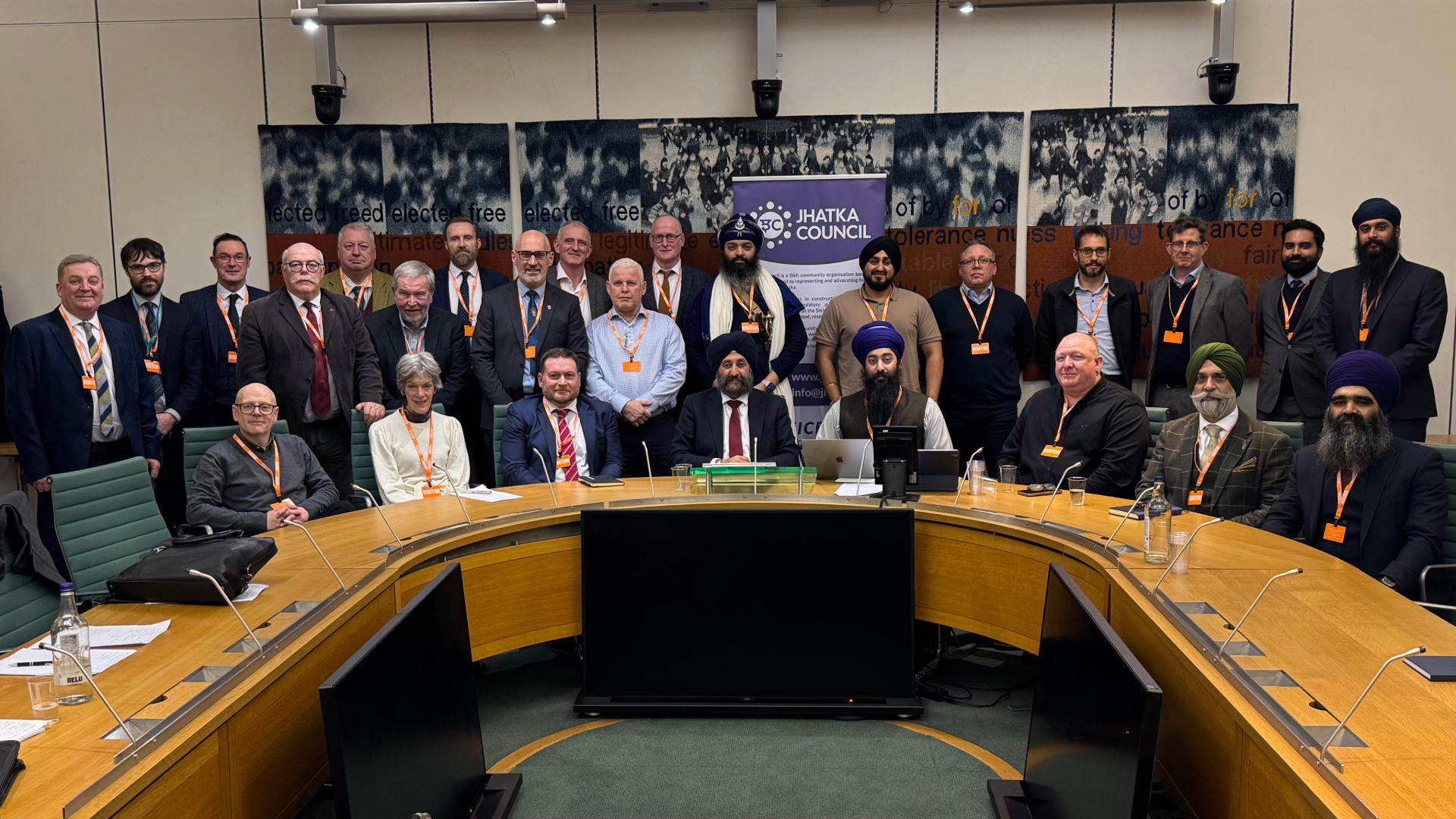
Marking a positive start to the year, a wide-ranging stakeholder focus group was held on Thursday 15 January 2026. It brought together regulators, industry specialists, animal welfare experts and members of the Sikh community to explore how the Jhatka method of slaughter could be better understood and incorporated into modern abattoir systems.
The meeting opened with a welcome and an introduction to Jhatka and the work of Jhatka Council by Dr James Holt and Harpreet Singh. They outlined the religious and cultural significance of Jhatka, describing it as a single, decisive act intended to cause instant death. They emphasised the Council’s commitment to constructive engagement with regulators, processors and welfare organisations, rather than confrontation. They also explained that methods involving throat-slitting are incompatible with Sikh beliefs, reinforcing abstinence from both conventional and ritual slaughter, and that decapitation is therefore considered the only acceptable method.
The discussion then moved to the practical aspects of meat processing. Abattoir specialists outlined standard operational stages and explained where and how Jhatka could fit within existing systems. Their presentation focused on traceability, hygiene controls and workflow, stressing that any integration must comply with current regulatory and food safety requirements.
Scientific and technical issues were addressed by experts in irreversible stunning, particularly penetrative captive-bolt stunning. They examined how irreversibility is defined in animal welfare legislation and highlighted differences in interpretation between regulators, scientists and faith groups. This helped shift the discussion towards measurable welfare outcomes rather than assumptions.
Innovation was a central theme. Mick Asquith spoke about advances in machinery and how modern engineering could improve consistency, safety and welfare in slaughter processes. He suggested that innovation, guided by clear standards and oversight, could help bridge the gap between traditional practices and modern abattoir environments.
Design considerations were explored by Joss Faulkner, who focused on abattoir layout and infrastructure. He explained how careful design could allow Jhatka to be included without disrupting throughput or compromising welfare and compliance, noting that early design choices can prevent operational issues later.
Jonathan Fisher followed with a detailed explanation of the overall process, aiming to improve shared understanding. His contribution helped clarify technical aspects for non-specialists and reinforced the value of clear communication between all stakeholders.
Food Standards Agency (FSA) then set out its position, with contributions from Kevin Maher, David Graham and Collin Wilson. They explained the current regulatory framework, the FSA’s role in enforcement and assurance, and the legal limits within which any slaughter method must operate. Their input was notable for its emphasis on dialogue and clarity around responsibilities.
Animal welfare remained central throughout. Welfare experts James Russell, Troy Gibson, John Pegg, Huw Golledge and Charlie Mason shared evidence-based perspectives on welfare indicators, monitoring and assessment, and the importance of robust training and auditing to ensure acceptable welfare outcomes.
Training and competency were addressed by Jane Downes, who outlined FDQ initiatives and highlighted the importance of accredited training, ongoing professional development and assessment in maintaining sector standards.
The wider supply chain was also considered. Peter Jones spoke about hunting and its place within the supply chain, drawing parallels with issues of traceability, standards and consumer confidence.
The meeting concluded with reflections and thanks from Gurinder Singh Josan MP on behalf of Jhatka Council. He welcomed the breadth of expertise and the constructive tone of the discussions, noting that progress depends on continued collaboration between faith communities, regulators, industry and welfare specialists. The focus group was also attended by Warinder Juss MP (Wolverhampton West). A group photograph marked the close of a meeting that many described as an important step towards greater understanding and informed dialogue.